You just got a message with “TB” in it and now you are not sure what it means. Is it a throwback? Is someone asking you to text them back? Or does it mean something else entirely? You are not alone in this confusion.
TB is one of those two-letter abbreviations that pops up constantly across texting, Instagram, Snapchat, TikTok, and Reddit, and its meaning shifts depending on where you see it and who sent it. This guide breaks down everything you need to know about TB, from its origins to how it is used today and how to reply when someone sends it your way.
What Does TB Mean in Text?
TB most commonly stands for two things in texting: Throwback and Text Back.
Throwback is the more popular meaning on social media. It refers to old memories, past photos, or nostalgic moments someone wants to revisit or share. If someone captions an old photo with “TB to summer 2021,” they are using it as throwback.
Text Back is the more functional meaning in direct messaging. It is a short way of asking someone to reply to a message they have not responded to yet. If someone ends a text with “TB when you can,” they are simply asking for a response.
Here is a quick breakdown:
| Meaning | Full Form | Most Common Platform | Example |
| TB | Throwback | Instagram, TikTok, Snapchat | “TB to our road trip last year” |
| TB | Text Back | SMS, WhatsApp, Snapchat DMs | “Hey, TB when you’re free” |
| TB | Too Bad | Casual texting | “That’s TB, you missed out” |
| TB | Tuberculosis | Medical or formal contexts | “Tests came back, it’s not TB” |
| TB | Terabyte | Tech contexts | “My drive has 2 TB of storage” |
In everyday casual texting, Throwback and Text Back are the two meanings you will run into most often. Context makes all the difference.
Origin and Cultural Footprints
The story of TB in digital slang has two separate starting points.
The Throwback meaning grew directly out of social media culture in the early 2010s. Instagram popularized the trend of posting old photos on Thursdays under the hashtag #ThrowbackThursday, which was often shortened to #TBT. Over time, users started dropping the day entirely and just using TB as a casual shorthand for any nostalgic post, not just Thursday ones. By the mid-2010s, TB as throwback had spread beyond Instagram into everyday texting and captions across all platforms.
The Text Back meaning has slightly older roots. Before smartphones, people already used phrases like “call me back” or “hit me back” in casual spoken conversation. When SMS texting took off in the early 2000s, character limits pushed people to shorten everything they could. “Text me back” naturally compressed into TB, and the abbreviation stuck. It traveled from SMS into WhatsApp, Snapchat, and iMessage as those apps took over.
What makes TB interesting culturally is that both meanings coexisted and grew at the same time through different channels. The throwback meaning rode the wave of visual social media, while the text back meaning came from the speed-driven texting habits of everyday communication. Today both meanings are fully established and widely recognized.
Other Definitions of TB
Beyond Throwback and Text Back, TB can carry a few other meanings depending on the context.
Too Bad is a less common but real usage. Someone might say “TB for you” in response to bad news in a casual, sometimes sarcastic tone.
Tuberculosis is the medical abbreviation most older generations recognize first. In any health-related conversation, TB refers to the infectious lung disease, not a social media trend.
Terabyte is how TB appears in technology and storage discussions. If someone is talking about hard drives, cloud storage, or data, TB means terabyte.
Team Bonding occasionally appears in workplace or group chat settings, though this is rare and usually spelled out to avoid confusion.
To Be shows up sometimes in very casual writing as a shortened form, though this usage is not common.
In almost every everyday texting situation, you can rule out the technical and medical meanings immediately just by looking at who sent it and what they were talking about.
Who Uses It Most?
TB is used most heavily by Gen Z and Millennials, though the specific meaning each group reaches for tends to differ slightly.
Gen Z gravitates toward TB as Throwback for nostalgic content and storytelling on social media. They grew up with platforms built around visual sharing and the whole throwback trend was already established by the time they became heavy social media users.
Millennials use both meanings comfortably. They were the generation that adopted TB as Text Back during the early SMS era and also embraced the throwback trend on Instagram and Facebook when it took off.
Younger teenagers and Gen Alpha users tend to pick up TB from whatever context they first encounter it in, most often from TikTok or Snapchat.
Older adults who are not heavy social media users often do not recognize TB as slang at all and may associate it only with the medical term tuberculosis, which is a common source of confusion across generations.
TB Meaning Slang TikTok
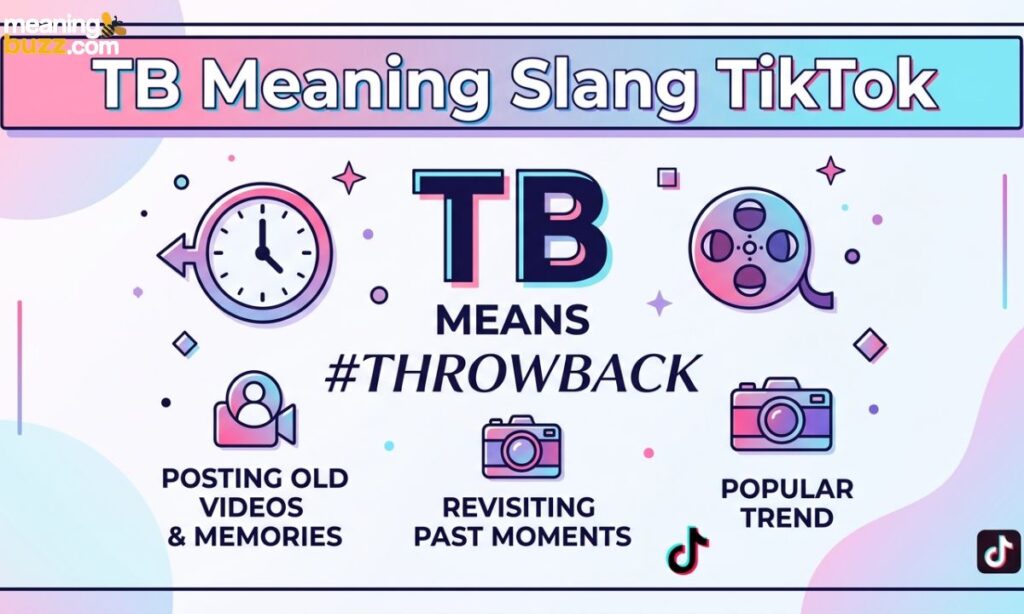
On TikTok, TB almost always means Throwback. The platform is built around short-form video content, and throwback videos are a popular format where creators revisit old clips, past trends, viral moments, or personal memories set to nostalgic music.
You will often see TB used in TikTok captions, text overlays on videos, and in the comments section when someone recognizes old content. A caption might read “TB to when this song was everywhere” or a comment might say “tb fr, this trend was so fun.”
Gen Z also uses TB on TikTok with a layer of irony sometimes. Posting a “throwback” to something that happened only a week ago is a joke format that plays on the exaggerated nostalgia of the original trend. If you see “tb to yesterday,” someone is being playful, not confused.
TB Meaning in Text Snapchat
Snapchat is a platform where both meanings of TB appear, but the context usually makes it clear which one someone means.
When TB appears in a Snap caption or story post with an old photo, it is Throwback. Snapchat has a Memories feature that resurfaces old snaps, and users often share these with a “TB” caption to signal they are looking back at the past.
When TB appears at the end of a direct message or disappearing chat, it almost always means Text Back. Snapchat conversations are quick and casual, so sending “TB when you see this” is a common way to ask for a reply without pressure.
Also read HMB Meaning in Text: Origin, Common Confusions, And Usage
TB Meaning in Text From a Guy
When a guy sends TB, the meaning depends entirely on the message surrounding it. If he sends you an old photo or references a past memory with TB, he is using it as Throwback. It can be a casual nostalgia reference or it can signal that he is thinking about a shared moment you both had, which adds a personal emotional layer.
If he ends a message with just “TB” or “TB me later,” he is simply asking you to reply when you get a chance. It is a low-pressure way to ask for a response without sounding demanding.
In either case, there is no hidden meaning to overthink. TB from a guy is almost always straightforward once you look at the context of the message.
TB Meaning in Text From a Girl
When a girl uses TB, the throwback meaning is especially common. Sharing old photos and memories is a deeply social act, and using TB to bring up a shared moment or a fond memory is a way of saying “I remember this and it matters to me.”
If she sends you a photo with “TB to this,” she is inviting you to share in the nostalgia. If it is a memory you shared together, it can be a way of acknowledging that shared history.
If she sends “TB” without a photo at the end of a conversation, she likely means Text Back and is waiting for your reply. Reading the full message before responding makes all the difference.
Usage of TB in Different Contexts
TB works differently depending on where and how it appears. Here are some common real-world examples:
In casual texting:
- “Hey, tb when you get a chance, need to tell you something.”
- “TB to when we used to hang out every weekend.”
On Instagram:
- Caption under an old photo: “TB to our beach trip, miss this so much.”
- Story post with a throwback selfie: “TB to this era honestly.”
On TikTok:
- Video caption: “TB to when this sound was everywhere.”
- Comment on an old trend video: “TB fr, this was peak.”
On Snapchat:
- Memory snap: “TB to last summer, can’t believe it’s been a year.”
- Direct message: “Just watched it, tb your thoughts.”
In professional settings: TB should be avoided entirely. It is too casual and too ambiguous for workplace emails or formal communication. Use full phrases instead.
How Gen Z Uses TB Today
Gen Z’s relationship with TB is more layered than straightforward nostalgia. They use it for genuine throwbacks, but they also use it ironically to poke fun at the concept of nostalgia itself.
Sending “tb to three days ago” about something that barely qualifies as a memory is a Gen Z humor move. It compresses the timeline dramatically on purpose, playing on the format while subverting the expectation of deep nostalgia.
Gen Z also uses TB as a relationship signal. Sending someone an old photo of a moment you shared together with “tb” carries emotional weight. It says you thought about that moment and wanted to bring it back up, which can be meaningful depending on the relationship.
At the same time, TB as Text Back remains practical and common in Gen Z messaging. It is softer than saying “you never replied” and more direct than just waiting silently for a response.
TB Meaning in Text Instagram
On Instagram, TB is almost always Throwback. The platform’s culture is built around photos and memories, and the throwback format has been a staple since the early days of #ThrowbackThursday.
Users caption old photos with “TB,” post throwback stories, tag friends in old pictures, and use TB in comments when they spot an old photo in someone’s feed. It creates engagement and connection by tapping into shared memories.
Instagram also uses TB in DMs sometimes, where the Text Back meaning can apply if someone is following up on a conversation. But in public posts, captions, and stories, Throwback dominates completely.
Brands and influencers also use TB regularly to share behind-the-scenes content, older campaigns, or personal stories from earlier in their careers. It connects them to their audience through authenticity and nostalgia.
Does TB Mean “To Be Honest”?
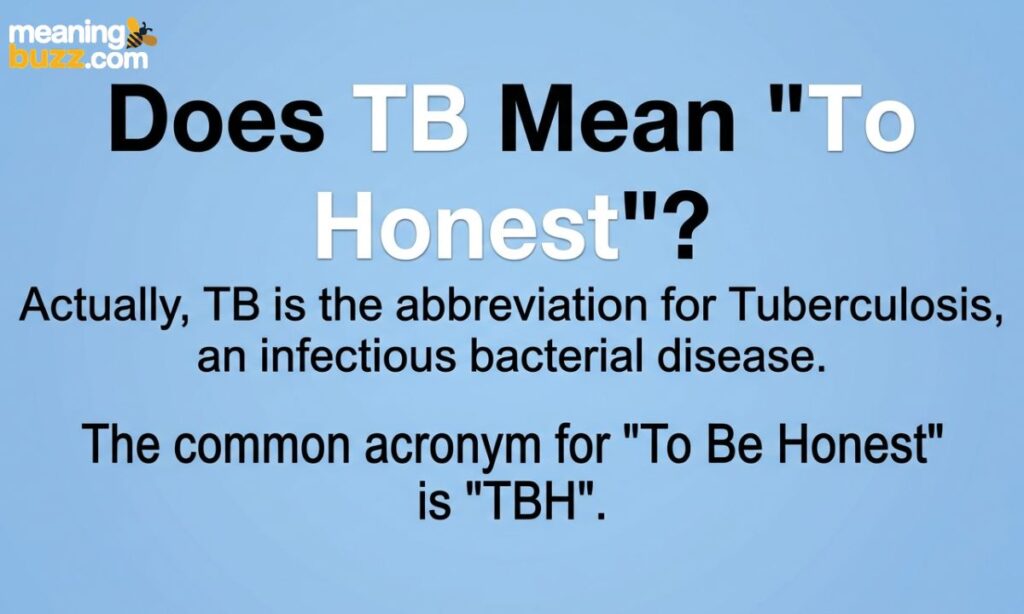
No. TB does not mean “To Be Honest.” That is TBH.
This is one of the most common mix-ups people make with TB. Both abbreviations start with the letter T and show up in casual conversation, which causes confusion for people who are less familiar with texting slang.
Here is the clear difference:
| Abbreviation | Meaning | Example |
| TB | Throwback or Text Back | “TB to last year” / “TB me later” |
| TBH | To Be Honest | “TBH I wasn’t expecting that” |
| TBT | Throwback Thursday | “#TBT to this classic photo” |
If you see TBH, someone is about to say something candid. If you see TB alone, they are either sharing a memory or asking for a reply.
Meaning Across Social Media
TB does not behave identically on every platform. Here is a quick platform guide:
Instagram: TB = Throwback. Used in captions, posts, and stories for nostalgic content. Rarely means Text Back in public posts.
TikTok: TB = Throwback. Used in video captions and comments. Also used ironically for mock nostalgia in Gen Z humor.
Snapchat: TB = Both. In Memories posts, it is Throwback. In direct messages, it usually means Text Back.
WhatsApp and SMS: TB = Text Back. In private conversations, this meaning dominates.
Twitter/X: TB = Throwback most often, especially with old photos or throwback tweets.
Reddit: TB = Throwback in most subreddits. Can mean Text Back in personal conversation threads but this is less common.
Common Confusions and Wrong Interpretations
TB trips people up in a few predictable ways.
The biggest confusion is between Throwback and Text Back. Someone sends “TB” after sharing an old photo and the recipient thinks they are being asked to reply urgently. Or someone sends “TB” asking for a reply and the other person thinks they are reminiscing about something.
The second common confusion is with TBH. People who are newer to texting slang often conflate TB and TBH because they look similar and both appear in casual conversation.
The third confusion is generational. Older users who are not active on social media still associate TB primarily with tuberculosis, the medical term. Getting a message that says “TB to that concert we went to” can genuinely read as a health reference if the person is not familiar with the slang.
Non-native English speakers also commonly misinterpret TB because text abbreviations are not taught in formal language learning and can feel like a secret code.
The safest way to avoid confusion is always to look at the full message. A photo attached almost always means Throwback. A request for a reply in a one-on-one chat almost always means Text Back.
Similar Terms, Alternatives, and Related Slang
If you want to express the same ideas as TB without using the abbreviation, here are some alternatives:
For Throwback:
- TBT (Throwback Thursday)
- Flashback
- Old times
- Memories
- Back in the day
- Nostalgia post
For Text Back:
- HMB (Hit Me Back)
- LMK (Let Me Know)
- HMU (Hit Me Up)
- “Reply when you can”
- “Get back to me”
- “Let me know your thoughts”
Related slang you might see with TB:
- TBH (To Be Honest)
- TBQH (To Be Quite Honest)
- TBF (To Be Fair)
- NGL (Not Gonna Lie)
How to Reply to TB
How you reply to TB depends entirely on which meaning applies.
If TB means Throwback:
- “Omg yes, I miss those days so much!”
- “TB for real, that was such a good time.”
- “Can’t believe that was already two years ago.”
- “You found this, the memories!”
- “We need to do this again honestly.”
If TB means Text Back:
- “Hey, just saw this, what’s up?”
- “Sorry for the late reply, what did you need?”
- “On it, give me a few minutes.”
- “Back now, what were you saying?”
- “Sorry I missed your message, I’m here now.”
Tips for replying well:
- Match the tone of the person who sent it. If they are casual and playful, keep your reply light.
- If you are not sure which meaning applies, just respond naturally and the conversation will clarify it.
- In professional settings, avoid using TB in your reply. Use full phrases for clarity.
- If someone is asking you to text back and you cannot reply right away, a quick acknowledgment goes a long way.
Frequently Asked Questions
What does TB mean in a text message?
TB most commonly means Throwback or Text Back in text messages. Context tells you which one applies.
Does TB mean Text Back or Throwback?
Both. In direct messaging it usually means Text Back. On social media posts and captions, it almost always means Throwback.
What does TB mean on Snapchat?
On Snapchat, TB means Text Back in DMs and Throwback in memory posts or stories.
What does TB mean on Instagram?
On Instagram, TB almost always means Throwback and is used in photo captions and nostalgic posts.
What does TB mean on TikTok?
On TikTok, TB means Throwback and is used in video captions, comments, and sometimes ironically in Gen Z humor.
Is TB the same as TBH?
No. TB means Throwback or Text Back. TBH means To Be Honest. They are completely different abbreviations.
What does TB mean from a girl?
From a girl, TB usually means Throwback if she sends it with a photo, or Text Back if she is waiting for a reply.
What does TB mean from a guy?
From a guy, TB works the same way. A photo with TB means Throwback. A plain TB at the end of a message means he wants you to reply.
Can TB mean Too Bad?
Yes, though it is less common. In some casual conversations, TB can mean Too Bad as a dismissive or sarcastic response.
Should I use TB in professional messages?
No. TB is too casual and ambiguous for work emails or formal chats. Write the full phrase instead.
Conclusion
TB is one of those abbreviations that packs two very different meanings into just two letters. On social media, it is almost always Throwback, a nod to old memories, past moments, and shared nostalgia. In direct messages, it usually means Text Back, a gentle nudge asking for a reply.
The key to understanding TB every time is context. Look at whether a photo is attached, which platform you are on, and who sent it. Once you get a feel for those signals, TB becomes one of the easiest abbreviations to decode in modern digital communication. Now that you know exactly what it means and how to use it, you are fully ready for the next time TB lands in your messages.