Ever texted someone three times only to see them posting Instagram Stories an hour later? That frustrating silence has a name — and it’s MIA. Whether you’ve seen it in a group chat, a TikTok caption, or a meme, MIA is one of those slang terms that shows up everywhere but doesn’t always get a proper explanation.
This guide breaks it all down — with real examples, comparisons, and even the best ways to respond when someone calls you out for going MIA.
What Does MIA Mean? (Spoiler: It’s Not Just for Soldiers)
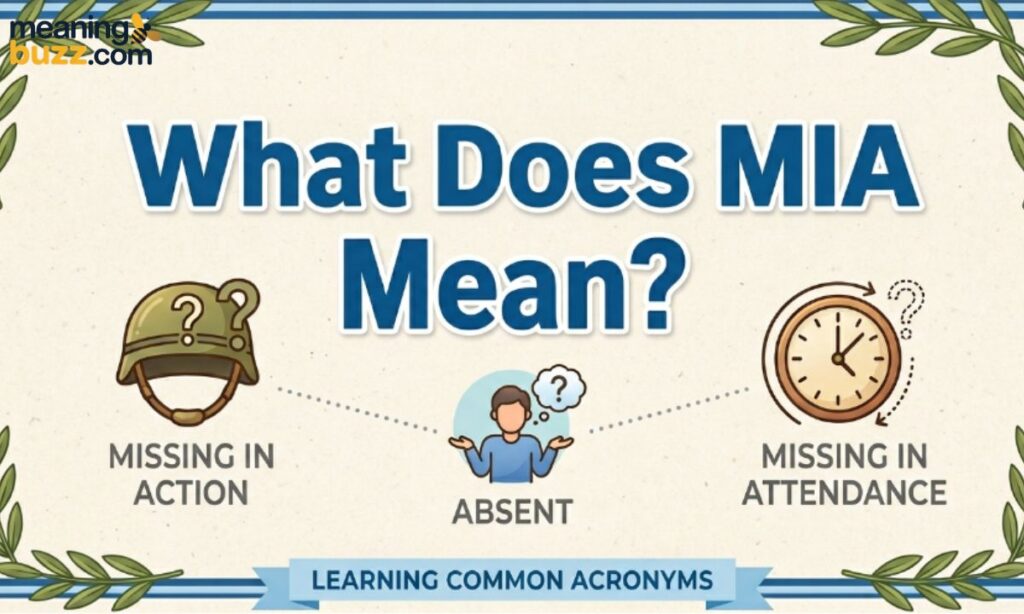
MIA stands for Missing In Action. Originally, it was a serious military term used to describe soldiers who disappeared during combat and whose location was unknown. The U.S. Department of Defense still uses it formally today.
But somewhere between the battlefield and your group chat, MIA picked up a whole new meaning. In everyday conversation, especially in texting and social media, MIA simply means someone has gone quiet, stopped replying, or temporarily vanished from the digital world without much explanation.
Think of it as a shorthand for: “Hey, where did you disappear to?”
MIA Meaning In Text Slang
In texting and online chats, MIA is used to describe someone who has been unresponsive or absent for a noticeable period. It’s casual, punchy, and gets the point across without a long explanation.
Common ways people use MIA in text slang:
- “You’ve been MIA all week — everything okay?”
- “Sorry, I went MIA. My life got crazy.”
- “My motivation is MIA, honestly.”
- “Where’s Jake? He’s been MIA since Tuesday.”
One key thing to note: MIA usually carries a tone of temporary absence, not permanent disappearance. That’s what makes it different from ghosting (more on that below).
Real-Life Text Examples
Here’s how MIA looks in actual conversations:
Example 1 — Friends:
Alex: “Bro, you’ve been MIA for like 4 days. You good?” Jordan: “Lol sorry, work got insane. Back now!”
Example 2 — Group Chat:
“Has anyone heard from Maya? She’s gone full MIA on us.”
Example 3 — Self-Referencing:
“I know I went MIA. Life happened. Miss you guys.”
Example 4 — Playful:
“My social life has been MIA since I started that new job.”
MIA Meaning on Instagram
On Instagram, MIA is used when someone suddenly stops posting, responding to DMs, or engaging with stories. Followers often notice this and will comment things like “Where have you been?? You’ve been MIA!” on someone’s first post after a long break.
Influencers especially use MIA as a way to address their audience when they return from an unplanned hiatus. A caption like “I know I’ve been MIA — here’s what happened” signals a comeback post and often drives high engagement.
MIA Meaning on TikTok
TikTok took MIA to a whole new level. The #MIA hashtag has racked up over 2.3 billion views, with creators making videos in these popular formats:
- “POV: Your friend who went MIA finally texts back” — dramatic, comedic scenarios
- “Things I did while MIA” — montages of life events during a digital detox
- “Seasonal MIA” — videos joking about disappearing every winter or during exam season
- “Main character MIA” — cinematic “reappearance” videos with glow-ups and transitions
On TikTok, going MIA has become almost a personality trait — something Gen Z wears with a mix of humor and self-awareness.
Also read ILY Meaning in Text: Your Ultimate Guide to This Heartfelt Acronym
MIA Meaning in a Relationship
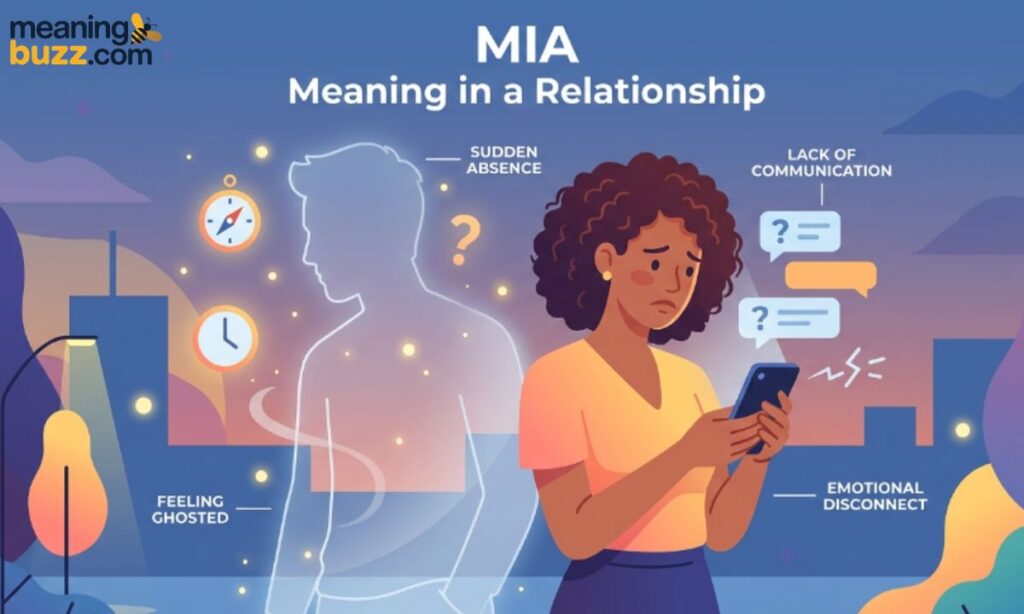
In relationships, MIA takes on more emotional weight. When a partner or romantic interest suddenly becomes hard to reach, stops initiating conversations, or pulls back from plans without explanation, people say they’ve gone MIA.
It can range from:
- A few days of low contact during a stressful period
- Suddenly not replying to texts in a situationship
- A friend slowly drifting away without a clear reason
Context matters a lot here. “He’s been a little MIA lately” might be said with mild concern, while “She’s been MIA for two weeks with no explanation” can signal something more serious — or the start of a ghosting situation.
From War Zones to WhatsApp: How MIA Went Viral
The journey of MIA through language is surprisingly fascinating:
| Era | How MIA Was Used |
| 1910s–1940s | Strictly military reports during World Wars |
| 1980s–1990s | Entered civilian vocabulary through war movies and news |
| Early 2000s | Adopted by internet forums and gaming communities |
| 2010s | Spread through texting and social media platforms |
| 2020s | Exploded on TikTok and became mainstream Gen Z slang |
Quarantine culture during the COVID-19 pandemic also played a big role. With everyone stuck at home and glued to their phones, any break from digital communication stood out more than ever — and MIA became the go-to label for it.
MIA vs. Ghosting vs. AFK: What’s the Difference?
These three terms often get mixed up, but they mean very different things:
| Term | Meaning | Tone | Duration |
| MIA | Temporarily unreachable or absent | Casual, neutral | Short to medium term |
| Ghosting | Intentionally cutting off all contact | Negative, hurtful | Permanent or long-term |
| AFK | Away from keyboard (gaming/work chats) | Neutral, informational | Very short-term |
The key difference: MIA implies they’ll come back. Ghosting implies they won’t. AFK is usually announced and expected to be brief.
A 2024 survey found that 58% of people incorrectly used “ghosting” and “MIA” interchangeably — so knowing the difference actually puts you ahead.
“I Go MIA” Meaning
When someone says “I go MIA sometimes,” they’re being upfront about a personal pattern — usually admitting they tend to withdraw, pull back from communication, or take unannounced breaks during stressful or overwhelming times.
It’s often used as a heads-up in friendships or relationships:
“Fair warning — I go MIA when I’m anxious. It’s not personal.”
It can also be used humorously:
“I go MIA every time my bank account hits zero.”
This phrasing is self-aware and, when used honestly, can actually build trust by setting communication expectations in advance.
How to Respond When Someone Calls You MIA?
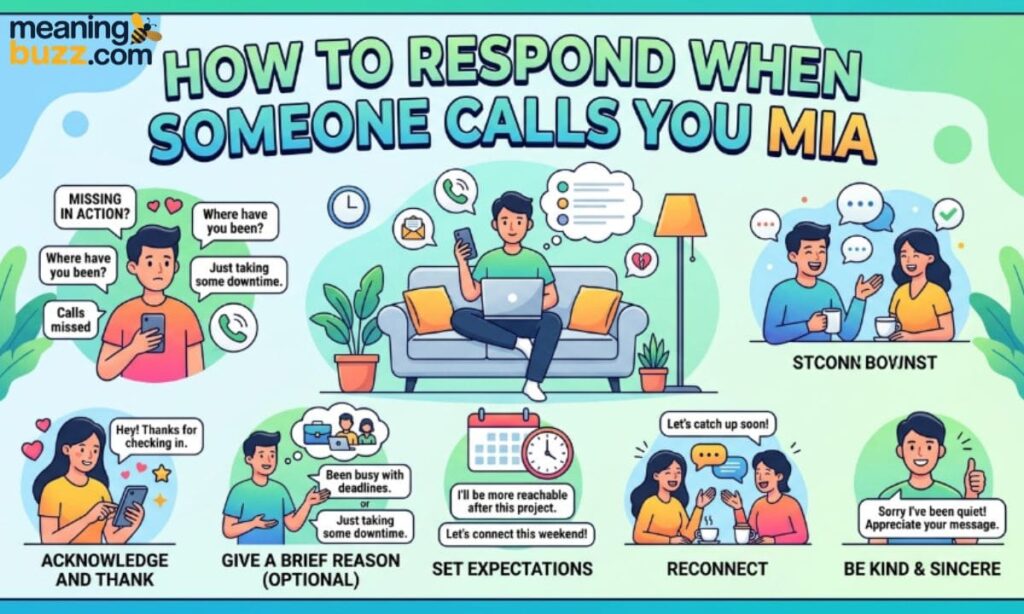
Getting called out for being MIA doesn’t have to be awkward. Here are a few response styles depending on the situation:
Casual/Funny:
“I know, I know — I’ve been undercover. Mission complete though.”
Honest:
“You’re right, I’ve been MIA. Life got overwhelming and I pulled back. I’m sorry.”
Professional:
“Apologies for the delayed response — it was a hectic week. I’m back and catching up now.”
Playful deflection:
“MIA? I prefer ‘strategically offline.’ “
The key is to acknowledge the absence without over-explaining. A short, warm response usually does the trick.
MIA Around the World (Not Everyone Uses It!)
MIA is predominantly American slang that spread globally through TikTok, Instagram, and gaming culture. But not every culture uses it the same way:
- Spanish-speaking countries: May use desaparecido (“disappeared”) instead
- Non-English-speaking countries: Local slang often replaces MIA, though exposure through social media is increasing
- UK and Australia: The term is understood but less commonly used organically in everyday speech
If you’re texting someone from a different cultural background, it’s worth knowing they might not immediately get the reference.
MIA in 2024: Why It’s Bigger Than Ever
A few factors have made MIA more popular than ever:
- Social media culture — In an always-online world, any absence gets noticed faster
- Gen Z humor — The term fits perfectly into ironic, self-deprecating internet humor
- Influencer culture — When creators go quiet, fans immediately label it as “going MIA”
- Work-from-home slang — Remote teams use it when someone’s unreachable on Slack or Teams
- Dating apps — A 2024 Hinge survey found 68% of users report matches going MIA within the first week of chatting
Interestingly, 42% of those “MIA” matches eventually resurface — proving the term really does imply temporary, not permanent.
When Not to Use MIA
MIA is casual slang, and like all slang, context is everything. Avoid using it in these situations:
- Formal emails or work communications — Use “unavailable” or “unresponsive” instead
- When someone is actually missing — If you’re genuinely worried about someone’s safety, use clear, direct language
- When someone is going through a mental health crisis — Texting “You’ve been so MIA lol” to someone who’s been struggling with depression can feel accusatory and hurtful
- With older generations — Many people over 50 may still primarily associate MIA with its military meaning and find it jarring in casual use
Frequently Asked Questions
What does MIA mean in texting?
It means “Missing In Action” — used to describe someone who has gone quiet or disappeared from communication for a while.
Is MIA the same as ghosting?
No. MIA usually means a temporary absence with the expectation of returning, while ghosting means intentionally cutting off all contact permanently.
What does “I’ve been MIA” mean?
It’s a way of acknowledging that you’ve been absent or unresponsive — often said when someone returns after a period of silence.
Can MIA be used professionally?
Generally, no. Stick to casual texts and chats. In formal settings, use clearer language like “unavailable” or “out of office.”
What does MIA mean on TikTok specifically?
On TikTok, MIA describes someone who has stopped posting or engaging. It’s also a popular video theme where creators joke about disappearing and dramatically returning.
Is MIA still popular in 2024–2025?
Yes — more than ever. With billions of views on the #MIA hashtag and its widespread use across WhatsApp, Instagram, Discord, and TikTok, MIA is firmly embedded in modern digital slang.
Conclusion
MIA has come a long way from military reports to meme culture. Today, it’s a versatile, well-understood piece of internet slang that captures something very relatable in the digital age — the occasional need to disappear, recharge, and come back. Whether you’re using it to call out a quiet friend, explain your own absence, or add some flair to a TikTok caption, MIA is a term worth knowing well. Just remember: keep it casual, read the room, and maybe don’t use it in your next formal email.
Now that you know exactly what MIA means — go ahead and text that person who’s been radio silent. They’ll know exactly what you mean.